
No products in the cart.
Return To Shop


Medical Apparel: A Practical Selection Guide
Medical apparel for healthcare professionals should be selected according to role and workflow, not appearance alone. Which garments suit daily duties? How should fit support movement? And when does work apparel become protective equipment? These practical questions matter to individual staff and facility teams.
Apparel needs to be comfortable and workable through a full shift, but comfort alone does not determine the right choice. Workplace requirements, task-related exposure, laundering instructions, and facility policies all shape selection. Scrubs generally function as uniforms. They should not be treated as a substitute for PPE when a task calls for protection.
This guide explains how role and setting inform apparel categories, what to consider for fit and daily function, and how protective gowns differ from routine workwear. It also offers a consistent process for aligning apparel decisions with defined requirements, without assuming one option fits every department.
Key Takeaways
- Choose medical apparel for healthcare professionals by matching role, workplace requirements, and daily tasks.
- Distinguish routine work clothing from protective equipment, and consider the task when selecting apparel.
- Use a consistent review process: define staff roles, review facility policy, assess work tasks, and align team requirements.
- Include apparel and gloves in facility supply planning, and consider custom PPE solutions for defined requirements.
Essential Functions of Medical Apparel
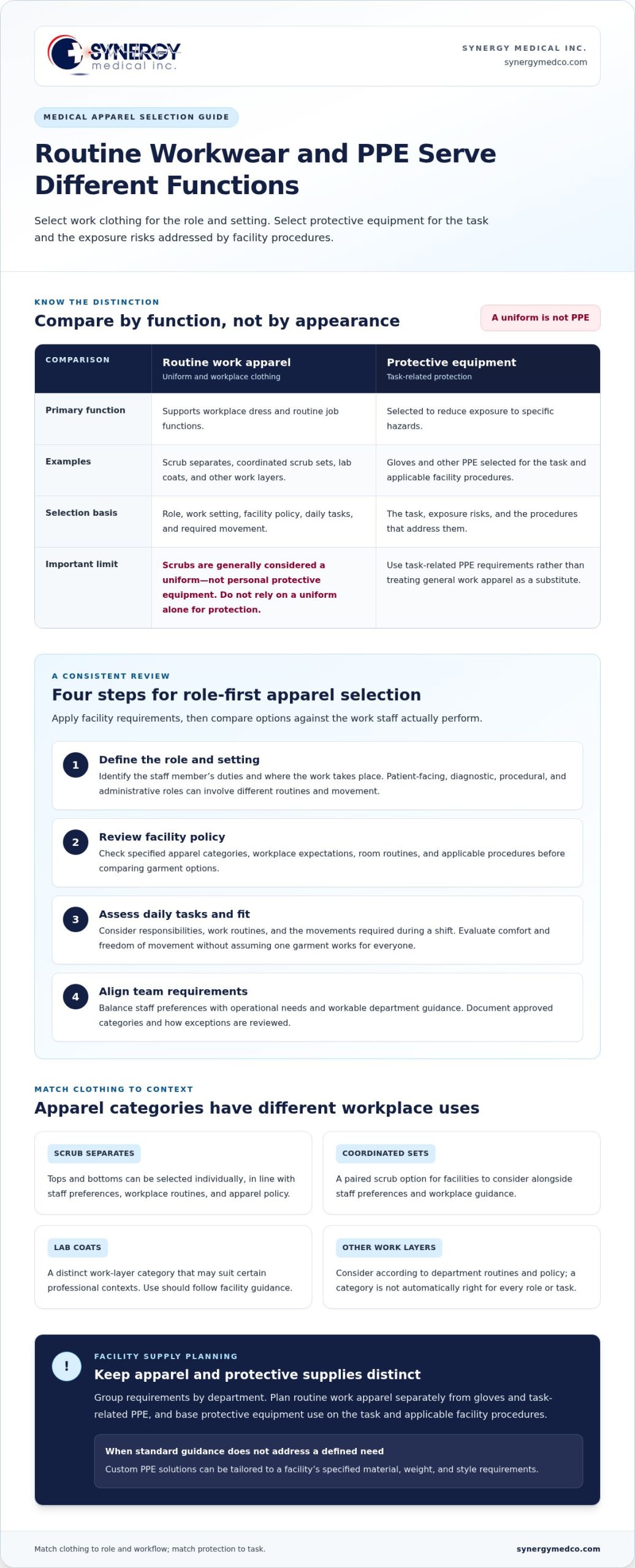
Medical apparel is work clothing selected for a healthcare role and its working conditions. Protective equipment is selected to reduce exposure to specific hazards. This distinction helps staff and facilities choose clothing for daily work without treating a uniform as protection. Medical apparel for healthcare professionals should reflect the role, setting, facility policy, and tasks performed during a shift.
How clinical role and setting shape apparel needs
Patient-facing staff may move between conversations, examinations, and routine care. Diagnostic roles may involve focused work at equipment or frequent movement between work areas. Procedural environments follow room routines and task-specific procedures, while administrative work may involve fewer direct care activities. Because these contexts differ, apparel decisions should account for expected movement, responsibilities, and workplace routines. Scrubs are a familiar category of clinical work clothing. For background on their history and types, see this overview of Scrubs (clothing).
Fit is a practical consideration in every setting. Clothing should accommodate the movements a person’s work requires and align with facility expectations. In procedural settings, apparel choices also sit alongside room protocols and equipment workflows, including those involving Bovie medical equipment.
Work apparel and protective equipment serve different purposes
Clinical apparel supports workplace dress and routine job functions. OSHA generally considers scrubs a uniform, not personal protective equipment. A uniform alone should not be relied on to provide protection. PPE selection depends on the task and applicable facility procedures, including the exposure risks those procedures address.
Facilities can make the distinction clear in staff guidance. Identify apparel expectations separately from protective equipment requirements, then connect PPE decisions to the task being performed. This keeps clothing selection practical while leaving hazard-related protection to the appropriate equipment and procedures.
Medical Apparel Categories and Their Workplace Uses
Choose an apparel category to fit the role and workplace context, then use facility policy to determine where and how it is worn. This approach helps teams compare garment types by function instead of treating a product category as a universal solution. Scrub separates, coordinated sets, lab coats, and other work layers are general examples, not interchangeable requirements for every department.
Scrubs, work layers, and other apparel categories
Scrub separates allow staff to select tops and bottoms individually, while coordinated sets provide a paired option. A facility can consider either format in light of staff preferences, workplace routines, and apparel policy. Lab coats and other work layers are distinct categories that may suit certain professional contexts. Their use should be determined by facility guidance, not assumed from a job title.
For medical apparel for healthcare professionals, choosing a category is only the first step. Departments can document which garment types fit their routines, then use the same guidance when onboarding staff or reviewing apparel needs. This keeps expectations clear without implying that a category provides protection or suits every task.
Where gloves and custom PPE fit into supply planning
Gloves and personal protective equipment belong in related but distinct supply decisions. Glove selection and PPE use should follow the task and applicable facility procedures. General work apparel does not replace those requirements. Custom PPE solutions are tailored to a facility’s defined material, weight, and style requirements, making them an option when standard guidance does not address a specific need.
For practical planning, group requirements by department and distinguish routine apparel from task-related protective supplies. Synergy Medical Inc. supplies professional medical apparel and gloves to healthcare facilities nationwide, with consultative support and custom PPE solutions. Teams reviewing related healthcare supply needs can explore Synergy Medical Inc.’s healthcare supplies as part of that planning.
How to Evaluate Medical Apparel for Fit, Workflow, and Facility Policy
A consistent selection process helps staff and purchasing teams connect apparel choices to actual work requirements. Evaluate medical apparel for healthcare professionals in four steps: define the role, review facility policy, assess daily tasks, and align team requirements. This sequence keeps individual preferences in view while grounding decisions in workplace needs.
A role-first apparel selection process
Start with the staff member’s duties and work setting. Apply facility requirements before comparing apparel options. These questions can guide the review:
- Define the role: What work does the staff member perform, and in which setting?
- Review policy: Which apparel categories and workplace expectations does the facility specify?
- Assess tasks: What movements, routines, and responsibilities shape the shift?
- Align requirements: Which preferences can be accommodated while keeping department guidance workable?
Fit and freedom of movement are practical considerations. Staff can assess whether clothing is comfortable during the movements their duties involve, without assuming a particular garment will work the same way for everyone. Weigh individual preferences against operational needs and consistent department guidance.
Facility-level considerations for apparel programs
Purchasing teams can document approved apparel categories, department guidance, and the process for reviewing exceptions. Clear records help staff apply expectations consistently and give buyers a shared basis for planning supplies. Keep apparel guidance separate from PPE requirements, and tie claims about protection or compliance to product documentation and facility policy.
Care instructions should follow the garment label and facility procedures. Do not assume that one laundering method applies to every item. Including care guidance in internal apparel documents helps staff follow the instructions relevant to the garments they wear.
Review medical apparel and supply options
Medical Apparel Supply for Healthcare Teams: Synergy Medical’s Approach
Facility apparel planning involves more than selecting garments. Teams need to connect staff roles and workplace procedures with supply requirements, then maintain guidance that works across departments. Synergy Medical supplies professional medical apparel and gloves to healthcare facilities as part of their supply planning.
Apparel and PPE considerations for facility teams
Clear internal guidance helps purchasing teams distinguish routine apparel needs from requirements tied to specific tasks. Documented department expectations can inform supply decisions and support consistency among staff, while keeping protective equipment decisions connected to applicable facility procedures and product documentation.
When a facility has defined requirements for material, weight, or style, custom PPE solutions can support planning around those specifications. Synergy Medical also provides consultative support to help facilities consider their stated needs. This assistance supports planning; it does not replace facility procedures or establish compliance on its own.
Organize apparel, glove, and PPE requirements by role or department so staff and purchasing teams can refer to the same guidance. Review that reference as operational needs change to keep supply decisions aligned with current facility procedures.
A practical next step for healthcare organizations
Before discussing supply needs, gather a concise set of information: the roles and departments involved, the workplace procedures that guide apparel and protective equipment, and the apparel, glove, or custom PPE requirements already identified. This provides a practical starting point and connects facility priorities with supply planning.
Put Your Apparel Guidance Into Practice
A thoughtful approach to medical apparel for healthcare professionals helps facilities move from individual garment requests to more intentional supply planning. A shared framework gives purchasing teams a clear basis for evaluating needs while leaving room for differences across departments.
Consider apparel alongside the other supplies that support clinical teams. Coordinating these needs helps organizations plan with purpose rather than treating each request as a separate decision.
Synergy Medical supports healthcare facilities with professional medical apparel, gloves, and custom PPE solutions.
Use your documented role, policy, and task requirements to guide the next step in supply planning.
Frequently Asked Questions
Can healthcare professionals wear personal scrubs to work?
Whether personal scrubs are permitted depends on the employer’s dress code, department procedures, and current facility policy. A worker’s preference for a familiar garment does not establish workplace approval. Before wearing personal items, review the organization’s instructions for the department and any processes for changing or caring for work clothing. Follow current facility directions if requirements differ.
How often should medical apparel be replaced?
There is no universal replacement interval for medical apparel. Staff and facilities can review each item’s condition, fit, care-label directions, and internal procedures when deciding whether it remains suitable for work. For example, a garment that no longer fits or has visible damage should be managed under workplace policy, rather than kept in use based on an assumed lifespan.
How should medical apparel be laundered?
Follow the garment’s care label and your facility’s procedures. Directions can differ by garment and material, so do not assume one washing method applies to every item. Check the label before laundering and follow internal instructions for handling work clothing. If label directions and workplace guidance seem inconsistent, use the facility’s established process for resolving the question.
Does medical apparel have to meet a specific standard?
Requirements depend on the garment’s intended use, workplace, and applicable facility procedures. Do not infer a standard or certification from a garment’s appearance or category; rely on relevant product documentation and internal guidance. Ordinary work apparel should not be treated as PPE unless its documentation and intended use support that role. Facilities can record the basis for any protective-use decisions.
What should healthcare teams consider when standardizing medical apparel?
Before setting team guidance, document role needs, facility policies, staff workflow, and approved apparel categories. Invite staff to identify practical fit and movement considerations across their work routines. Feedback from different departments, for example, can show where one shared category works and where distinct guidance is needed. A consistent process supports coordination without assuming one garment type suits every organization.
About author
