
No products in the cart.
Return To Shop


Sterile Surgical Gloves: Choosing Materials, Fit and Protection
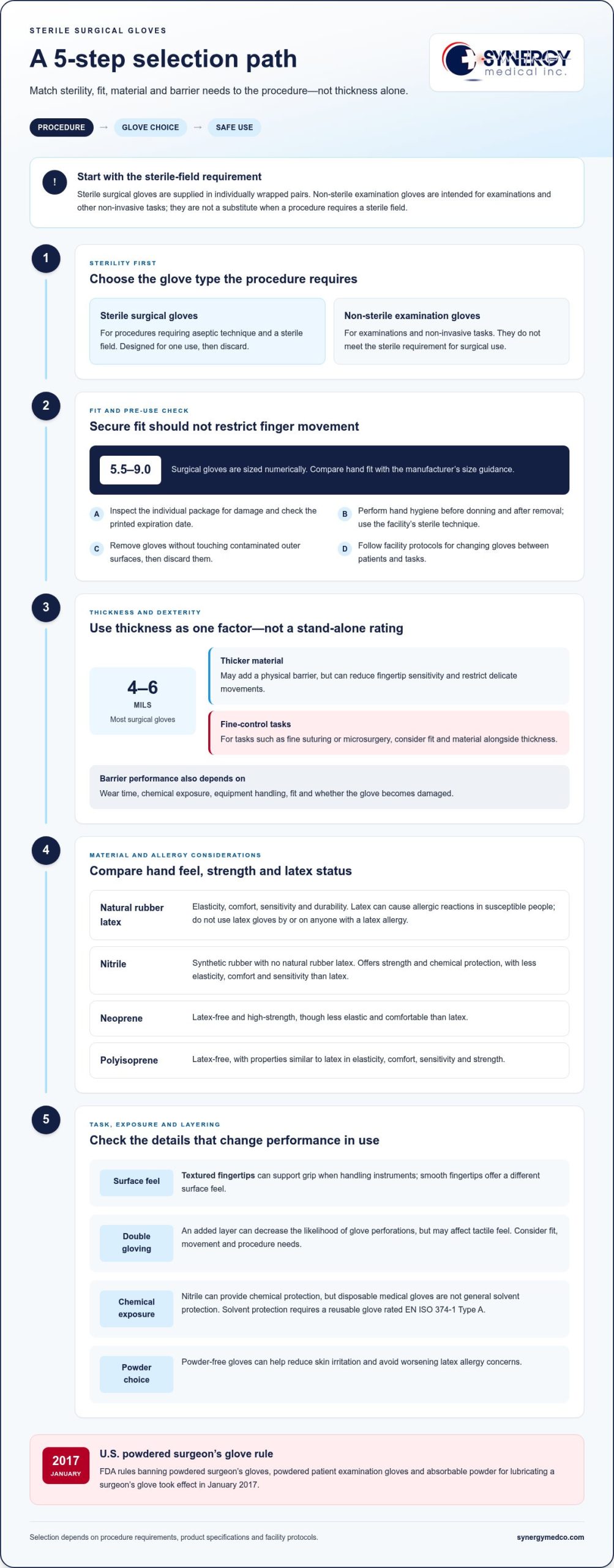
A well-fitting glove can still be the wrong choice for a sterile procedure. Sterile surgical gloves are supplied in individually wrapped pairs and help maintain the sterile field; non-sterile examination gloves aren’t a substitute for surgical use. Careful selection of sterile surgical gloves considers the procedure, fit, material and applicable standards, not thickness alone.
That distinction matters because gloves must provide a barrier while allowing the hand control needed for the task. Latex, nitrile, neoprene and polyisoprene have different properties, and latex can cause allergic reactions in susceptible people. In the United States, FDA rules banning powdered surgeon’s gloves took effect in January 2017.
This guide explains how thickness affects dexterity, how material and allergy considerations shape glove choices, and what standards can tell you about performance. It puts key requirements in context so you can assess sterile gloves against a procedure’s demands rather than relying on a single specification.
Key Takeaways
- Distinguish sterile surgical gloves from non-sterile examination gloves when assessing what a procedure requires.
- Balance barrier needs with dexterity: thickness can affect tactile control during delicate tasks.
- Compare glove materials for fit, sensitivity and strength, and account for latex allergy concerns.
- Use relevant glove and manufacturing standards to interpret product documentation; consider Synergy Medical Exam Lights when planning clinical room equipment.
What Are Surgical Gloves?
Surgical gloves are sterile, single-use barriers for procedures requiring aseptic technique. Choose them based on sterility, fit, material, and the demands of the task.
Sterile and Non-Sterile Glove Choices
Sterile gloves are individually wrapped in pairs; non-sterile gloves are not supplied sterile. For invasive procedures requiring a sterile field, use sterile gloves. Non-sterile medical gloves are intended for general examinations and non-invasive tasks, not surgery. Match the glove type to the procedure’s sterility requirements. Disposable surgical gloves are designed for one use and should then be discarded.
Surgical and Examination Gloves
Surgical gloves are sterile and designed for procedures that require a sterile field. Medical examination gloves are generally non-sterile and intended for examinations or other non-invasive tasks. The two types are not interchangeable: examination gloves do not meet the sterile requirement for surgical use. Choose based on the procedure, not appearance or packaging alone. For either type, follow facility protocols for changing gloves between patients and tasks.
Sizing, Sterility, and Safe Use
Procedure demands also guide fingertip finish and powder choice. Textured fingertips can support grip when handling instruments, while smooth fingertips offer a different surface feel. Fine-control tasks, such as microsurgery, call for a fit and material that preserve tactile sensitivity; orthopedic work may place greater emphasis on durable barrier performance during instrument handling. Powder-free gloves can help reduce skin irritation and avoid worsening latex allergy concerns. In the United States, FDA rules banning powdered surgeon’s gloves, powdered patient examination gloves, and absorbable powder for lubricating a surgeon’s glove took effect in January 2017.
Glove thickness and trade-offs between protection and dexterity
Thickness can affect tactile control, but it does not determine barrier performance on its own. Match glove characteristics to the procedure, exposure, fit, and duration of use.
Thickness and Hand Dexterity
Most surgical gloves are 4 to 6 mils thick. Thicker material may add a physical barrier, but can reduce fingertip sensitivity and restrict delicate movements. That trade-off matters when placing fine sutures or manipulating small instruments. Compare glove thickness alongside fit and task requirements, rather than treating thickness as a standalone measure. Protexis™ PI surgical gloves are one product name healthcare teams may encounter; assess the documented specifications for the intended procedure.
Barrier Protection and Chemical Exposure
Barrier protection depends on more than rubber thickness. Wear time, chemical exposure, equipment handling, and fit all affect protection during surgical procedures. A glove that fits poorly or becomes damaged may not perform as intended. Nitrile can provide chemical protection, but disposable medical gloves are not general solvent protection. Solvent protection requires a reusable glove rated EN ISO 374-1 Type A. Match the glove to the specific chemical exposure and setting.
Single and Double Gloving
Single gloving means wearing one glove on each hand; double gloving means wearing two layers. The added layer can decrease the likelihood of glove perforations, but balance that consideration against dexterity and the needs of the procedure. Double gloves may affect tactile feel, particularly during fine instrument work. Assess fit and movement during relevant tasks, and follow facility protocols. Natural rubber latex, nitrile, and other materials also differ, so material is another selection factor.
Powder is a separate consideration from thickness and layering. Powder-free gloves can help reduce skin irritation and avoid worsening latex allergy concerns. For infection-control decisions, assess material, fit, exposure, and task demands together. A glove label alone cannot establish suitability for every chemical or surgical setting.
Sterile glove materials and allergy considerations
Material affects fit, tactile sensitivity, strength, and protection from exposure. Compare these properties with the procedure’s requirements and the needs of patients and staff.
Surgical Glove Materials
Natural rubber latex offers elasticity, comfort, sensitivity, and durability during surgery. Its flexible fit can support precise hand movements. Nitrile is a synthetic rubber that contains no natural rubber latex. It offers strength and chemical protection, but has less elasticity, comfort, and sensitivity. These differences can affect instrument control and performance during intended use.
Neoprene and polyisoprene are synthetic rubber alternatives. Neoprene is latex-free and high-strength, though less elastic and comfortable than latex. Polyisoprene is also latex-free and has properties similar to latex in elasticity, comfort, sensitivity, and strength. Both are described as resistant to extreme temperatures and harsh chemicals. Match material performance to the procedure’s contact and handling demands.
Allergy Considerations
Latex allergy became a growing concern among patients and healthcare workers during the 1990s. Latex gloves should not be used by or on anyone with a latex allergy. For those situations, nitrile, neoprene, or polyisoprene offers a latex-free material option. Facilities should account for known allergies when selecting gloves for staff and patients.
Material matters when procedures involve chemicals or medications. Nitrile provides chemical protection, but no glove should be assumed suitable for every substance. Carmustine and thiotepa can break through a suitable sterile surgical glove in tens of minutes. With latex gloves, hydrocarbon- or petroleum-based emollients weaken the rubber; water-based emollients are preferred. Assess the specific exposure, glove material, fit, and intended wear when considering barrier performance.
Medical-device and glove standards
Standards cover different aspects of glove quality, from freedom from holes to manufacturing controls. Read each identifier in context: a test result, product standard, and quality-management standard do not establish the same properties. For sterile surgical gloves selection, compare the relevant standard with the procedure’s barrier, handling, and sensitivity requirements.
EN 455 Parts 1, 2, 3, and 4 cover tests for holes, strength and elasticity, biocompatibility, and shelf life. Under EN 455-1, sterile surgical gloves have an AQL of 0.65 for freedom from holes; examination gloves have an AQL of 1.5. These figures distinguish the stated acceptance levels for holes. EN 455-2:2024 is identified as a standard for medical gloves, while ISO 10282:2014 is a benchmark for surgical gloves.
Manufacturing controls are another part of the picture. According to the International Organization for Standardization, EN ISO 13485 covers medical-grade manufacturing quality controls. It addresses how a manufacturer manages quality processes, not the tactile sensitivity or comfort of a finished glove. For biological evaluation, ISO 10993-5 tests cell safety, while ISO 10993-10 addresses skin irritation. These standards help frame material evaluation, including natural rubber products. Comparable quality assurance and controlled production protocols are also standard practice in adjacent health industries, where contract specialists such as Harmony Pharma Lab manage strict manufacturing environments for custom formulations.
Exposure-specific standards answer different questions. EN ISO 374-1 is a chemical-resistance rating, and EN ISO 374-5 covers protection from viruses, bacteria, and fungi. EN 16523-1 tests gloves for chemical leaks. Under ASTM D6978, most tested cytostatic substances show no breakthrough for 240 minutes with suitable gloves. That result applies to tested substances and suitable gloves, not every material or chemical. Check the standard’s scope against the exposure, thickness, and handling conditions at issue.
Review manufacturing quality, hole acceptance, biological evaluation, and chemical performance separately. Match each documented result to the glove’s intended use and donning conditions.
Synergy Medical Inc.: Exam Lights
Synergy Medical Inc. supplies Exam Lights for healthcare facilities planning clinical room equipment alongside their glove protocols. Glove selection addresses sterility, fit, material, and procedure-specific protection; exam and operating room equipment serve separate clinical needs. Synergy Medical Inc. also supplies Operating Room Lights, Medical Booms & Ceiling Supply Units, and Video Integration Solutions.
Exam Lights are intended for examination spaces, while Operating Room Lights serve operating room environments. Medical Booms & Ceiling Supply Units and Video Integration Solutions address other room equipment needs. These products support facility planning but do not replace decisions about sterile glove specifications, patient allergies, or procedure protocols. Consider each room’s intended use and equipment requirements when identifying relevant categories.
Contact Synergy Medical Inc. about Exam Lights
Plan the Next Equipment Decision
Include glove criteria in a broader review of clinical workflows. Sterile surgical gloves selection is one decision; equipment planning should separately reflect each room’s imaging and visualization needs. Synergy Medical Inc. supplies Surgical Monitors, Radiology Monitors, and Mammography monitors for facilities evaluating those requirements.
As your team sets procurement priorities, tie each choice to its intended clinical use. Clear specifications help departments compare needs and align equipment decisions with the work performed in each space. The same disciplined approach to sterile surgical gloves selection can help teams document why a product category suits a particular use.
For help with medical imaging equipment, contact Synergy Medical Inc.
Clear priorities provide a practical foundation for your next equipment decision.
Frequently Asked Questions
What Are Sterile Gloves?
Sterile gloves are processed and packaged for use when a sterile barrier is required. They help prevent contamination during procedures involving sterile instruments or sites. For example, a surgical team wears sterile gloves when maintaining aseptic technique. Choose gloves intended for the procedure, and follow facility protocols for storage, handling, and disposal after use.
What materials are surgical gloves made from, and how do they compare?
Surgical gloves are commonly made from natural rubber latex or synthetic materials such as nitrile, neoprene, and polyisoprene. Latex offers elasticity and sensitivity, while nitrile provides strength and chemical resistance. Neoprene and polyisoprene are latex-free options with different comfort and flexibility characteristics. Compare material properties with the required tactile control and exposure conditions rather than assuming one material suits every procedure.
When should surgeons choose powdered versus powder-free gloves?
In the United States, powdered surgeon’s gloves are not an option: FDA rules banning them took effect in January 2017. Powdered gloves used cornstarch to absorb moisture and improve grip, but powder-free gloves avoid that added powder. For current purchasing decisions, select powder-free surgical gloves and review package labeling for the intended use. Powder-free status alone does not determine sterility, fit, or suitability for a particular procedure.
What standards and FDA requirements apply to sterile surgical gloves in the United States?
FDA rules banning powdered surgeon’s gloves took effect in January 2017. For glove quality, EN 455-1 describes freedom-from-holes testing; its stated AQL for sterile surgical gloves is 0.65. This European standard is a useful performance reference, not a substitute for assessing U.S. FDA requirements. Review the product’s U.S. labeling and regulatory information, then distinguish regulatory compliance from voluntary standards or manufacturer quality-system certifications.
What are the risks of latex allergy and how can they be avoided?
Natural rubber latex can cause allergic reactions in susceptible healthcare professionals or patients. Avoid latex gloves for anyone with a known latex allergy, and choose a latex-free option such as nitrile, neoprene, or polyisoprene. Powder-free gloves can also help avoid worsening latex allergy concerns. Make allergy status visible in the care plan, and ensure the selected material suits the procedure and exposure.
About author
